
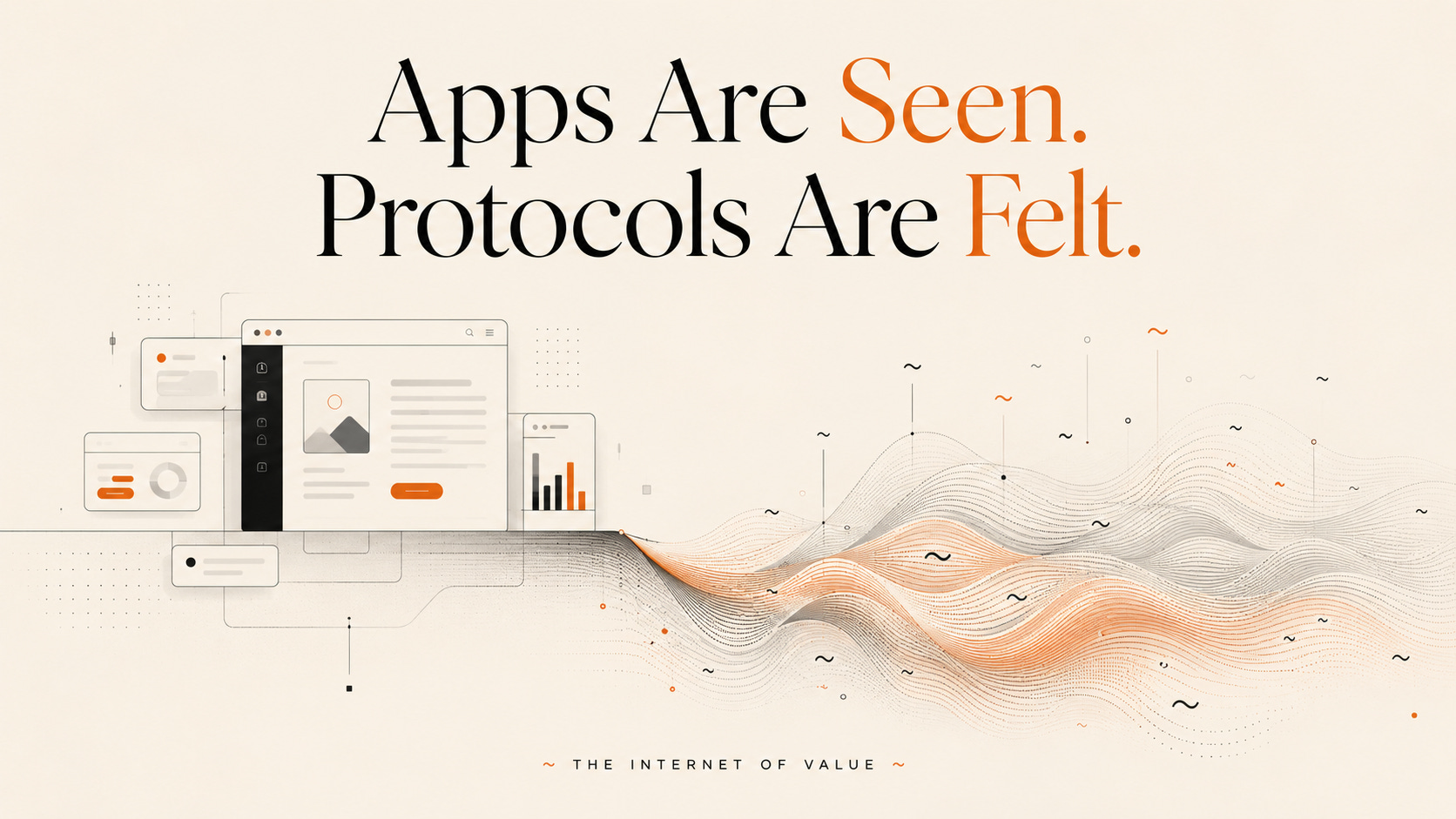
Apps Are Seen. Protocols Are Felt.
“Blessed are those who have not seen and yet have believed.”

There is a strange line in the Bible that has been sitting in my head for a few days. It comes after the resurrection, when Thomas says he will not believe unless he sees the wounds. Jesus appears, Thomas sees, and then comes the line: “Blessed are those who have not seen and yet have believed.”
For a long time, I used to hear that line only as a religious statement. Faith before evidence. Trust before proof. Belief before sight. But recently, while thinking about startups, software, protocols, and the Internet of Value, I started hearing it differently. It is not only a verse about faith. It is also a verse about invisible systems.
Some things are easy to believe in because they can be seen.
A hardware engineer can point to a breadboard and say, “Here is the circuit.” There is the resistor. There is the transistor. There is the wire. There is the current path. Even if you do not understand the full theory, your eye has something to hold. The thing exists in space. It has edges. It has weight. It can burn, break, short, heat up, or glow. Hardware has the advantage of physical evidence.
Software did not always have that advantage.
Before apps became normal, software was difficult to explain to people who were trained to think in visible objects. You could show someone code, but code does not immediately reveal itself to the non-programmer. A function is not a transistor. A loop is not a wire. A database is not a box sitting on a table, even if we keep drawing it as one in architecture diagrams. For a long time, software had to fight the suspicion that anything invisible was somehow less real.
Then the app arrived as software’s great act of translation.
The user interface became the wound in the hand. Here is the login screen. Here is the button. Here is the dashboard. Here is the chart moving after you enter data. Here is the notification. Here is the payment confirmation. Suddenly, software became visible through behavior. People did not need to understand the backend. They could touch the frontend. They could see software doing something.
That changed everything.
The app made invisible logic visible enough for adoption. A user did not need to know how authentication worked. They only needed to know that their password opened their account. They did not need to understand databases. They only needed to know that their photos, messages, orders, invoices, or bank balances were still there when they returned. Software became real not because people understood it, but because they could interact with it.
This is where protocols become difficult.
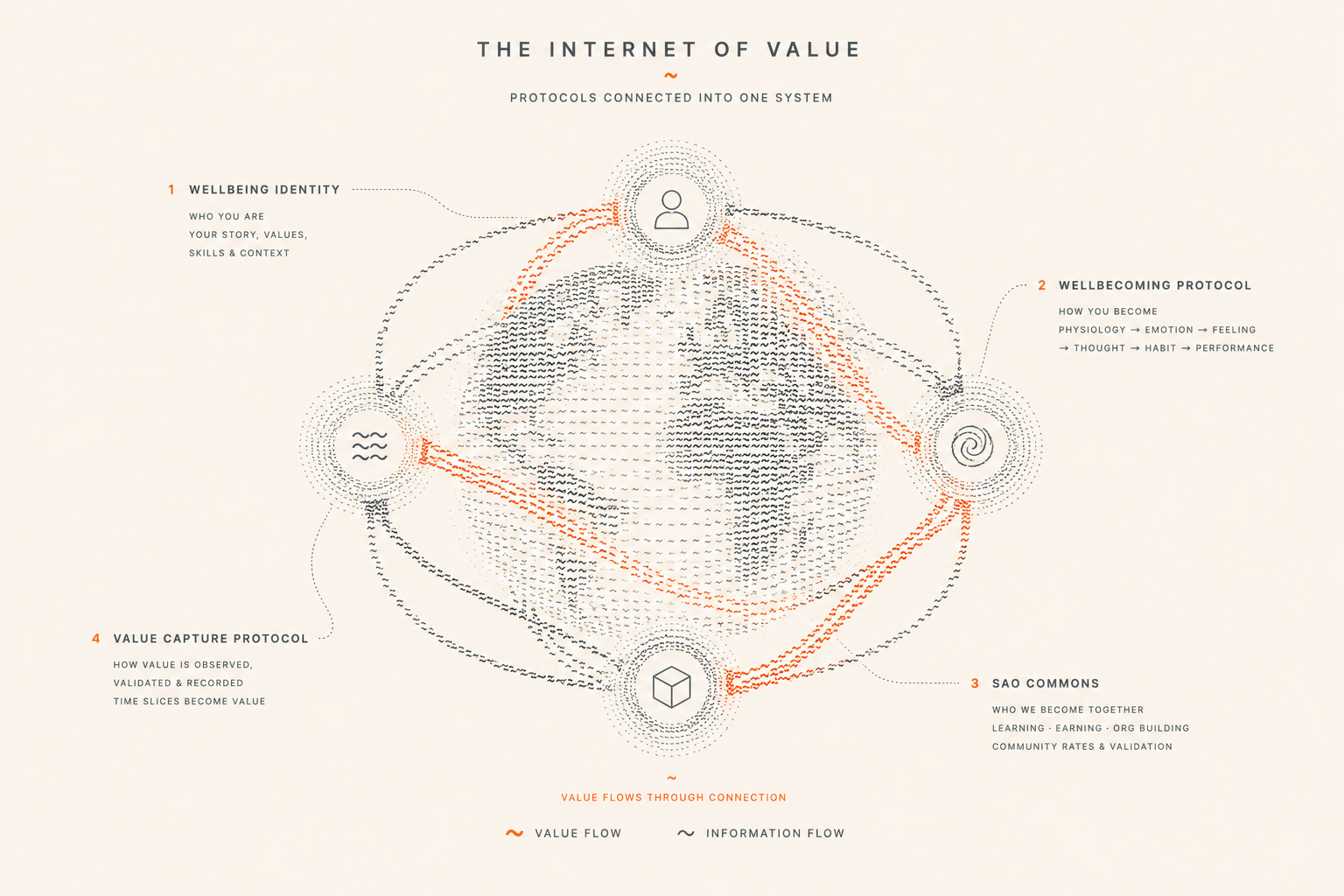
A protocol is not an app. A protocol is the invisible agreement underneath many possible apps. It is the grammar of coordination. It is the set of rules that allows different actors, machines, institutions, people, and systems to behave in a mutually intelligible way.
You do not really “see” a protocol the way you see an app. You see its effects. You feel its presence when things that should not easily coordinate suddenly coordinate.
You do not see HTTP when a webpage loads. You see the page.
You do not see TCP/IP when a message travels across networks. You receive the message.
You do not see UPI when a street vendor accepts money through a QR code. You see the payment succeed.
You do not see the English language as a protocol when two strangers have a conversation. You feel meaning moving between them.
This is why selling a protocol is harder than selling a product. A product can say, “Look at me.” A protocol has to say, “Look at what becomes possible when enough people follow this invisible structure.”
That is not an easy pitch. Most people do not wake up excited about invisible structures. They wake up excited about relief, status, money, beauty, convenience, belonging, speed, and control. Tell someone you are building an app, and they ask what it does. Tell someone you are building a protocol, and their eyes develop a loading spinner. The mind starts looking for a screen, a dashboard, a button, a demo, a logo, anything it can grasp.
This is natural. It is not stupidity. It is how humans understand reality.
We are embodied creatures. We trust what we can see, touch, repeat, and share. The abstract must become sensory before it becomes social. A theory becomes powerful when it creates tools. A rule becomes powerful when it shapes behavior. A protocol becomes powerful when it creates a felt shift in how people coordinate.
That is why I keep coming back to the line:
Apps are seen. Protocols are felt.
An app is seen in the interface. A protocol is felt in the coordination. An app gives you a screen. A protocol changes the possibility space.
An app asks, “Can you use this?”
A protocol asks, “Can you imagine a world where this becomes normal?”
That difference matters deeply for what we are building with the Internet of Value.
The Internet of Value is not merely a website, a book, a symbol, a set of videos, or a mathematical equation. Those are expressions. They are interfaces. They are early manifestations. They are ways of helping the mind approach something more difficult: a protocol for observing, mapping, validating, and valuing human time.
At the center is a simple but uncomfortable idea.
Human life already creates value through time, attention, emotion, skill, care, learning, work, recovery, and contribution. But most of this value is either poorly represented, badly measured, captured by institutions after the fact, or ignored entirely because it does not fit the economic dashboards we inherited. The economy can tell you what you bought. It can tell you what you earned. It can tell you how much a company is worth. It cannot tell you, with any real precision, who you are becoming through time.
That is the gap.
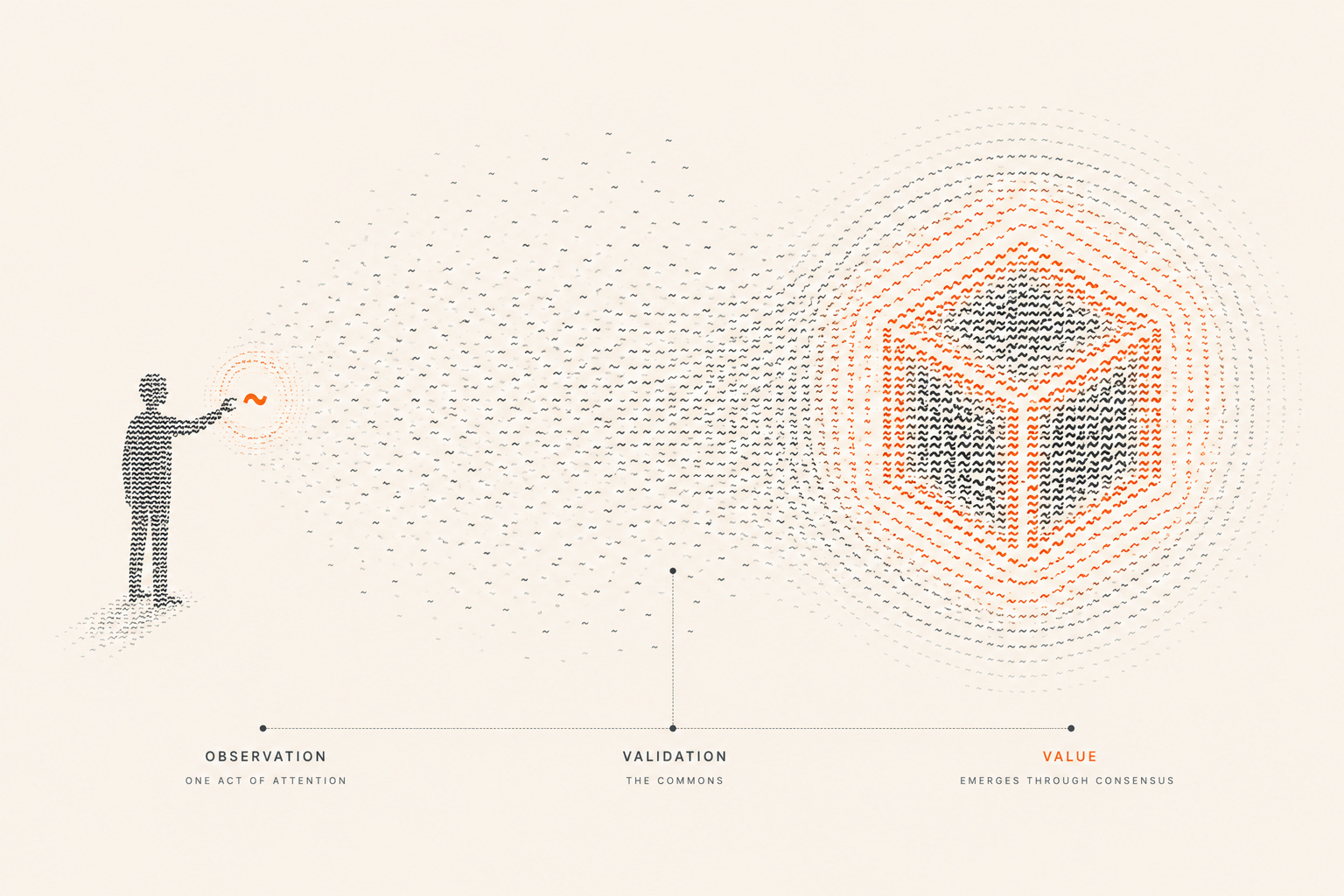
The Internet of Value begins from the time slice. A lived hour is not just an hour. It is an observed unit of becoming. In one hour, a person can recover, study, build, teach, organize, create, serve, regulate, care, sell, repair, or transform. The existing economy recognizes only some of these hours. It overvalues certain visible outputs and undervalues the deeper conditions that made those outputs possible.
So we ask a different question.
What if time could be observed not only as duration, but as becoming?
What if a person’s physiology, emotion, feeling, thought, habit, and performance could be mapped as part of a structured protocol?
What if communities could validate certain forms of contribution, not only through vague praise or social approval, but through shared rules?
What if value creation could be linked to wellbeing, skill, role, and community context?
This is where the equation appears: VC = W × Vcom.
Value Created equals Wellbeing Score multiplied by Value for the Commons. On the surface, this looks like math. But the math is not the deepest point. The deeper point is the shift in representation. Before you can measure something, you need a way to represent it. Before you can build an economy around human becoming, you need a grammar for seeing human becoming.
That grammar is the protocol.
And here is the problem: protocols do not arrive fully visible.
In the early days, people ask for the app. They ask for the dashboard. They ask for the marketplace. They ask for the wallet. They ask for the token. They ask for the institution. They ask for the case study. They ask for the government partnership. They ask for the enterprise customer. They ask for the thing that proves the thing.
Fair enough. Thomas had a point.
But the earliest believers in a protocol are rarely responding to the final interface. They are responding to the invisible architecture. They feel the shape of the thing before the world has built enough screens for it. They understand that once a new grammar is accepted, many products can emerge from it. They see that the protocol is not competing with one app. It is trying to define the conditions under which many future apps become meaningful.
That is a very different kind of seeing.
The first people who understood the internet were not waiting for Instagram. The first people who understood Bitcoin were not waiting for ETFs. The first people who understood UPI were not waiting for every coconut seller and tea stall to print a QR code. They saw the coordination layer before the cultural layer caught up. They did not see the whole future. Nobody does. But they felt that something fundamental had shifted.
That is the blessing.
Not blind belief. Not cult belief. Not “trust me bro” belief, which is basically theology for LinkedIn founders with ring lights. The blessing is the ability to perceive an invisible structure before it becomes obvious to the crowd.
This is also why symbols matter.
A symbol is not decoration. A symbol is the first sensory handle for an invisible system. The tilde in the Internet of Value is not just a nice design choice. It carries wave, approximation, transition, continuity, humility, vibration, and becoming. It says: this is not a rigid box economy. This is not a static identity system. This is a wave-based grammar for observing change through time.
The symbol helps the protocol become felt.
The book helps the protocol become understood.
The website helps the protocol become navigable.
The videos help the protocol become conversational.
The math helps the protocol become credible.
The logs help the protocol become lived.
The community helps the protocol become real.
Each layer gives the invisible thing another surface. But the protocol itself remains deeper than any one surface. This is why it is so easy to confuse the expression with the system. A person may look at the website and think the website is the thing. They may look at the equation and think the equation is the thing. They may look at a logo and think the logo is the thing. They may look at a time log and think the time log is the thing.
But the thing is the grammar connecting all of them.
This is the same mistake people make with language. They think language is words. It is not. Words are visible units. Language is the living protocol that allows meaning, memory, command, coordination, intimacy, law, myth, and trade to move between minds. You cannot point to English in the same way you point to a chair. You can point to a sentence, a dictionary, a poem, a contract, a joke, or a prayer. But English itself is distributed across people, rules, habits, histories, institutions, and uses.
Protocols are like that.
They become real by being used.
They become powerful by being shared.
They become trusted by being repeated.
They become civilization-scale when people stop noticing them.
The highest success of a protocol is invisibility. When it works, people stop talking about it. Nobody says, “I am now using the protocol of road lanes” every time they drive. Nobody says, “I am now invoking the protocol of calendar time” when they attend a meeting. Nobody says, “I am now participating in the protocol of money” when they buy tea. The protocol disappears into reality. It becomes the way things are done.
That is the ambition of the Internet of Value.
Not to become another app sitting between people and their lives. The world does not need one more dashboard asking humans to perform productivity cosplay.
The ambition is deeper: to create a grammar through which human time, wellbeing, contribution, and community value can become observable without being flattened, extractive, or dehumanizing.
This is a delicate line. The moment you measure human life, you risk violating it. The moment you score wellbeing, you risk turning inner life into another performance metric. The moment you assign value to time, you risk reducing the sacred mess of becoming into a spreadsheet. These are real dangers. They cannot be brushed aside with founder optimism and a beige landing page.
But the opposite danger is also real.
If we refuse to represent human becoming, then the old systems continue to represent us badly. GDP will keep measuring output while ignoring inner collapse. Companies will keep measuring productivity while ignoring burnout. Platforms will keep measuring attention while ignoring wellbeing. Credit scores will keep representing financial behavior while ignoring human context. Social media will keep representing identity through performance, aesthetics, and outrage.
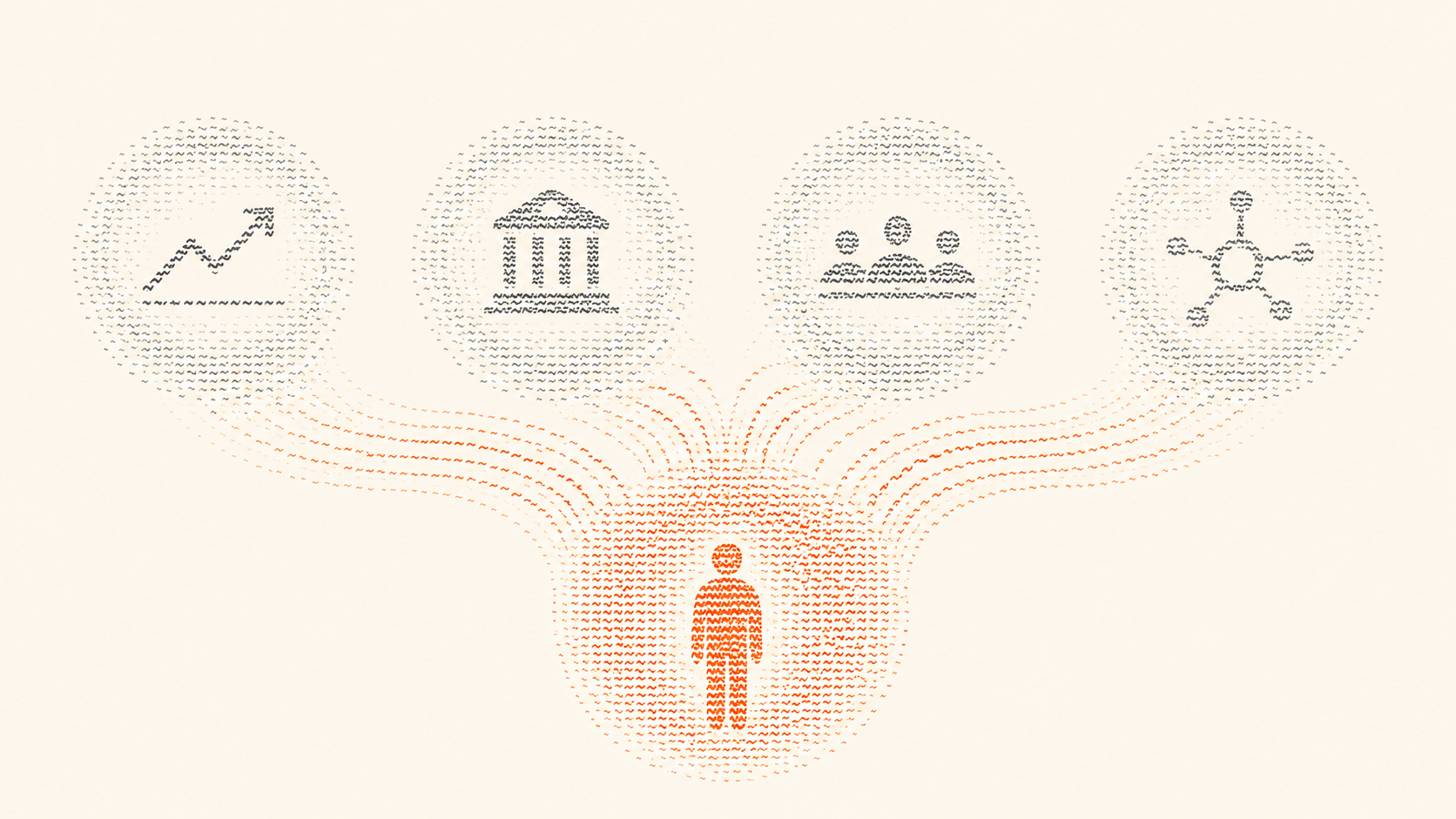
The question is not whether humans will be represented.
We already are.
The question is whether we can build better representations.
That is where the Internet of Value enters. It is not trying to make the human soul legible to a machine for extraction. It is trying to make human becoming legible to communities for validation, care, coordination, and value creation. That distinction is everything. One path turns people into data points. The other tries to give people a richer address in time.
An address in space tells you where someone is.
An address in time tells you who someone is becoming.
That is why “Apps are seen. Protocols are felt” works. The app is the surface. The protocol is the atmosphere. You know it is there because behavior changes. A person begins to observe their day differently. A community begins to validate contribution differently. A founder begins to see value beyond output. A worker begins to see recovery as part of performance, not failure. A system begins to distinguish between time spent, value created, and wellbeing preserved.
At first, this sounds abstract.
Then one day someone logs a time slice and realizes their workout was not a distraction from value creation. It was physiology improving the conditions for future value. Someone else logs a difficult emotional regulation moment and realizes that not all valuable hours look productive from the outside. Another person records a teaching session, a community call, a design sprint, a care activity, a recovery block, or a piece of writing, and the protocol begins to show a pattern: value was never only in the output. Value was also in the becoming that made the output possible.
That is when the protocol is felt.
Not as an idea, but as a shift in attention.
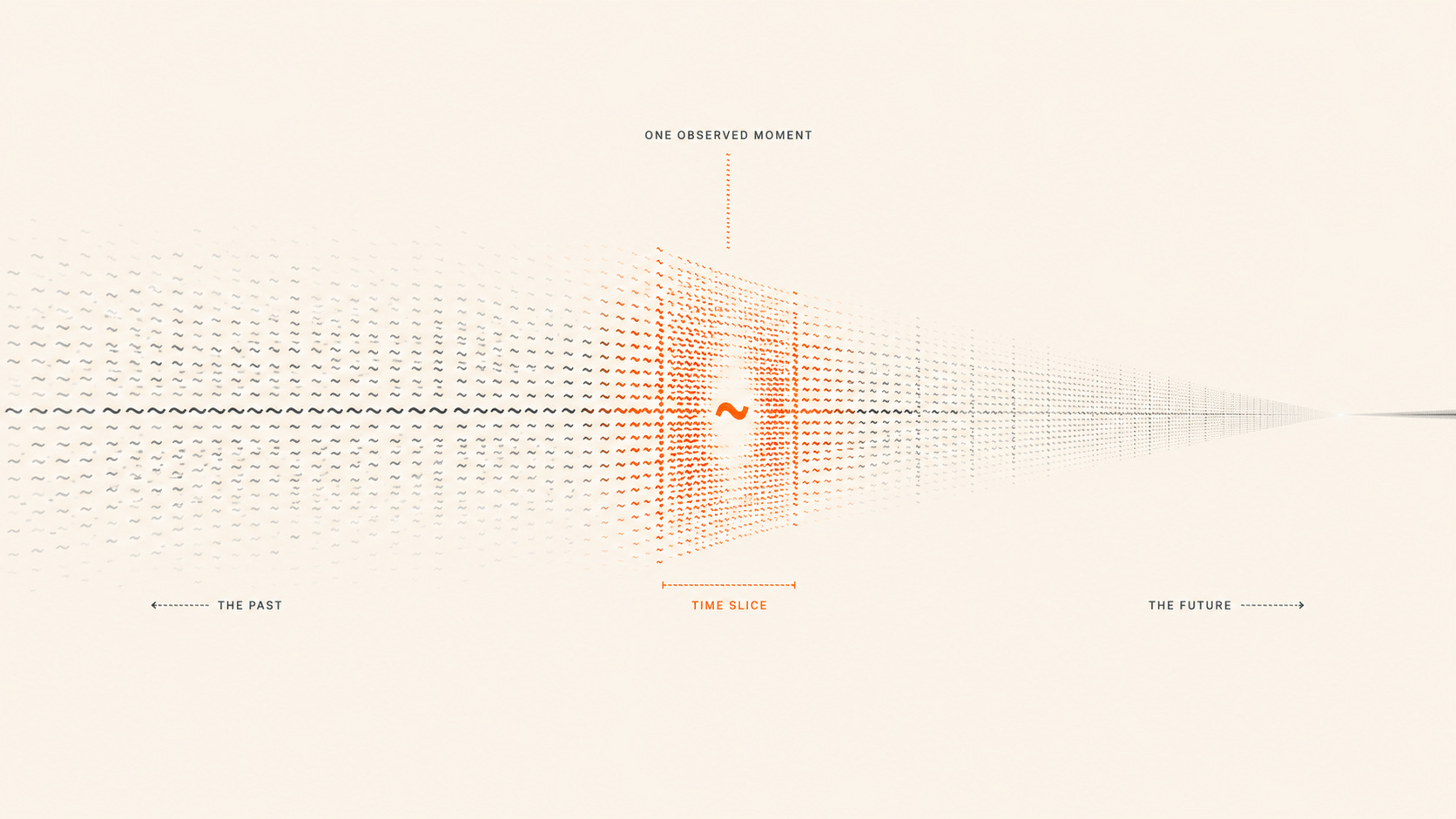
This is the observer layer. The modern economy is full of measurement systems, but poor in humane observation systems. It measures transactions, clicks, salaries, valuations, grades, scores, impressions, and productivity. But it does not know how to observe the living human as a becoming system inside time. It sees the sale but not the regulation that made the sales call possible. It sees the deliverable but not the emotional labor. It sees the company valuation but not the invisible community trust that carried the founder through collapse.
So much value is created before the world knows where to record it.
That is the opening.
The Internet of Value is a protocol for recording what the old economy cannot see yet. Not everything. Not perfectly. Not with the arrogance of total measurement. The tilde matters here because it carries measurement humility. Approximation is not failure. It is honesty. A wellbeing score is not the person. A time slice is not the life. A protocol is not the soul. But a better approximation can still be a civilizational improvement over a bad representation.
A map is not the territory, but a cruel map still damages the traveler.
We have been living inside cruel maps.
This is why the work cannot be reduced to startup theater. A startup demo asks, “Can I show you traction?” A protocol asks, “Can I show you a new way to coordinate reality?” The first can be judged quickly. The second needs a longer arc. It requires symbols, stories, math, rituals, logs, communities, validators, interfaces, and eventually institutions.
That does not mean we get to avoid proof. Quite the opposite. A protocol that never becomes usable is just philosophy wearing a hoodie. It has to touch the ground. It has to become a log, a wallet, a registry, a community process, a calculator, a dashboard, a certification, a workshop, a governance model, a case study. Thomas must eventually be given something to touch.
But before Thomas arrives, someone has to believe the invisible architecture is worth building.
That is the founder’s burden.
That is also the founder’s loneliness.
You are often trying to explain the protocol before the app exists, the grammar before the language community exists, the measurement before the institution exists, the institution before the market exists, and the market before the culture knows it needs one. People ask for proof, and you have fragments: a book, a website, an equation, a symbol, a few logs, a few conversations, a few people who understand. It can feel absurd. It can feel like trying to sell rain before clouds exist.
But this is how many new systems begin.
First, they are invisible.
Then they are strange.
Then they are mocked.
Then they are used by a small group of people with unusually high tolerance for abstraction.
Then an interface appears.
Then a behavior repeats.
Then a community forms.
Then the language stabilizes.
Then the protocol becomes obvious.
Then everyone says it was inevitable.
The last stage is always the most annoying. Nothing is more spiritually offensive than people calling obvious what they could not see when it was costly to see. But that is the nature of protocol work. You are not only building a thing. You are building the conditions under which the thing can later appear obvious.
So perhaps the blessing is not simply for those who believe without seeing.
Perhaps the blessing is for those who can feel the protocol before the interface exists.
They feel the need before the market names it.
They feel the grammar before the app displays it.
They feel the coordination failure before the institution admits it.
They feel the new economy before the old economy has a category for it.
That is where I locate the Internet of Value today.
It is becoming visible through its artifacts:
the book, the website, the videos, the equation, the symbol, the time slice, the Wellbecoming stack, the SAOcommons, the Value Capture Protocol, the Wellbeing Identity.
But beneath all of these is something that still has to be felt before it can be fully seen.
A new economy does not begin as a dashboard. It begins as a disturbance in the old measurement system.
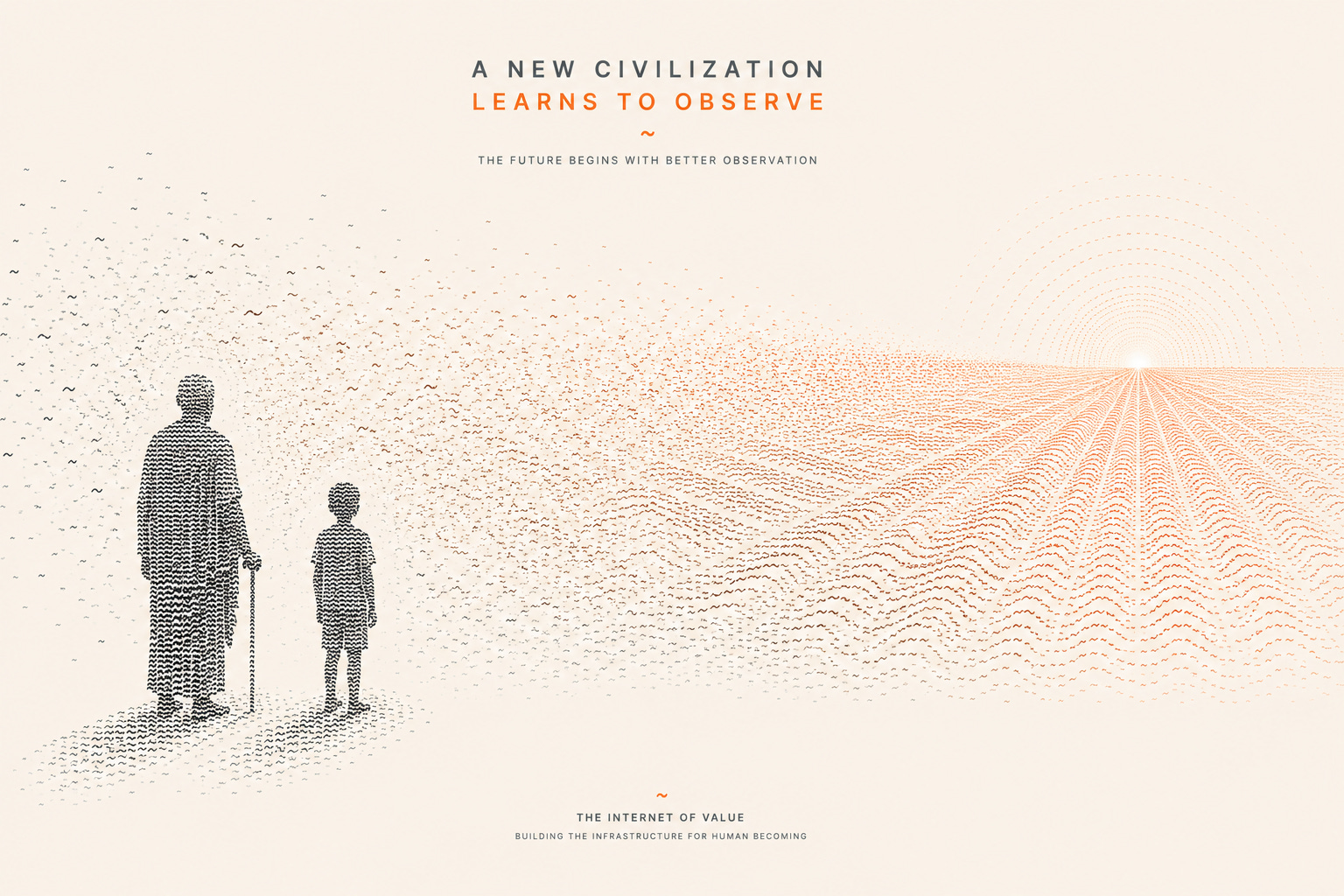
It begins when people realize that the categories they inherited can no longer hold the lives they are actually living. It begins when work, wellbeing, community, identity, and value stop fitting into separate boxes. It begins when a person asks, “Where did my day go?” and realizes the economy has no serious answer. It begins when a community asks, “Who created value here?” and realizes the existing tools are too crude. It begins when a founder asks, “What am I really building?” and discovers that the product is only the visible edge of a much deeper protocol.
Apps are seen. Protocols are felt.
And if the feeling is strong enough, the seeing will come.